
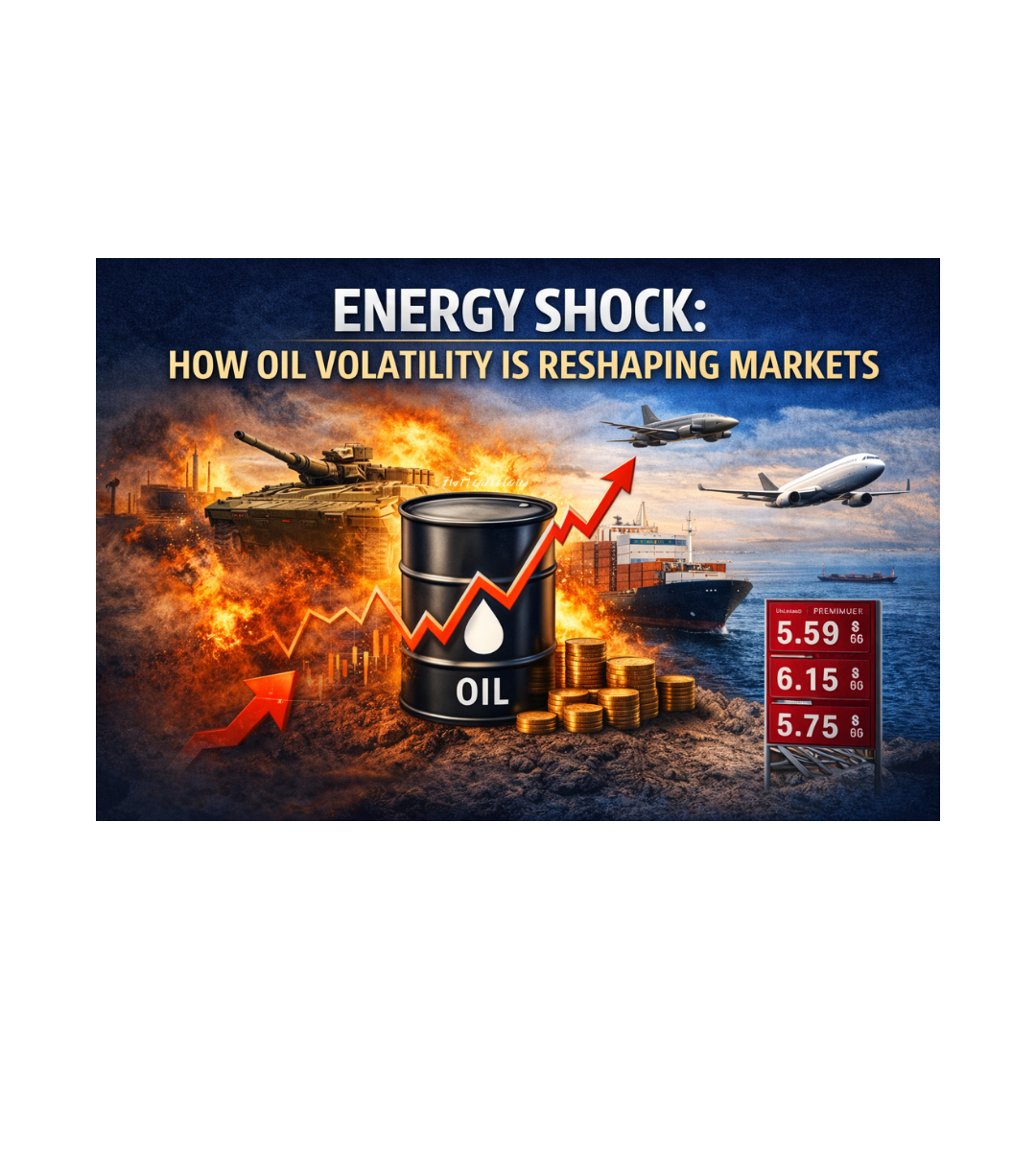
During geopolitical conflicts, one of the first and most immediate reactions is seen in crude oil prices. Supply disruptions, trade restrictions, and uncertainty around production create sharp price movements. For economies like India, which rely heavily on oil imports, these fluctuations have a widespread impact across sectors.
Why Crude Oil Becomes the Center of Attention
War periods tend to disturb global energy supply chains, leading to volatility in oil prices. This shift is driven by three primary factors:
-
- Supply Disruptions: Conflicts in oil-producing regions can restrict production or transportation.
- Geopolitical Uncertainty: Markets react quickly to potential risks in supply continuity.
- Strategic Reserves & Policies: Countries adjust reserves and import strategies to manage risk.
These factors make crude oil one of the most sensitive and closely tracked commodities during crises.
How Different Sectors Get Impacted
Crude oil volatility does not impact all sectors equally; it creates distinct winners and pressure points:
-
- Transport & Aviation: Rising fuel costs increase operating expenses, directly impacting profit margins.
- Manufacturing: Higher input and logistics costs affect production and consumer pricing.
- Energy Companies: Oil producers and upstream companies may benefit from higher prices.
In simple terms: When oil prices rise, cost-heavy sectors feel pressure, while resource-linked sectors may see support.
Ripple Effects on Inflation and Consumption
Oil price movements often extend beyond industries and into the broader economy. For India, where fuel plays a key role in cost structures, this impact is particularly significant:
-
- Inflationary Pressure: Higher fuel prices contribute to rising inflation.
- Goods Pricing: Increased transportation costs affect the pricing of everyday goods.
- Consumer Behavior: Consumer spending patterns may adjust as the cost of living rises.
Shifting Focus Toward Energy Diversification
Periods of volatility also bring attention to long-term energy strategies. Short-term disruptions often influence major structural changes, such as:
-
- Increased interest in renewable energy.
- A renewed focus on reducing import dependency.
- Investments in energy efficiency and alternative fuels.
What Needs Attention During Such Phases
While oil-linked movements create opportunities, certain risks remain. It is important to avoid:
-
- Reacting only to short-term price spikes.
- Ignoring sector-specific differences in impact.
- Overlooking long-term structural trends.
The Bigger Picture
Crude oil volatility reshapes sectoral dynamics. In the short term, we see price shocks and cost pressures. In the long term, we witness shifts in energy strategy and sector focus. Crude oil is more than just a commodity; it is a key driver of economic activity. During crisis periods, its movement reflects not just supply concerns, but also changing global priorities.
Frequently Asked Questions
- Why is the Indian market so sensitive to crude oil prices?
India imports over 80% of its crude oil requirements. When global prices rise, it increases the country’s import bill, puts pressure on the Rupee, and drives up costs across almost all industries. - Which sectors are most negatively affected by rising oil?
Aviation, paint companies, and logistics providers are typically hit hardest because fuel or oil-derivatives make up a massive portion of their operating costs. - Can any sectors benefit from oil volatility?
Yes. Upstream oil exploration and production companies often see better realizations when prices are high. Additionally, the renewable energy sector often sees increased investment interest as an alternative. - Does an oil price hike always lead to inflation?
Generally, yes. Since oil is used to transport food and essential goods, an increase in fuel prices usually “leaks” into the price of almost everything else, leading to cost-push inflation.


