Energy Shock: How Oil Volatility Is Reshaping Markets

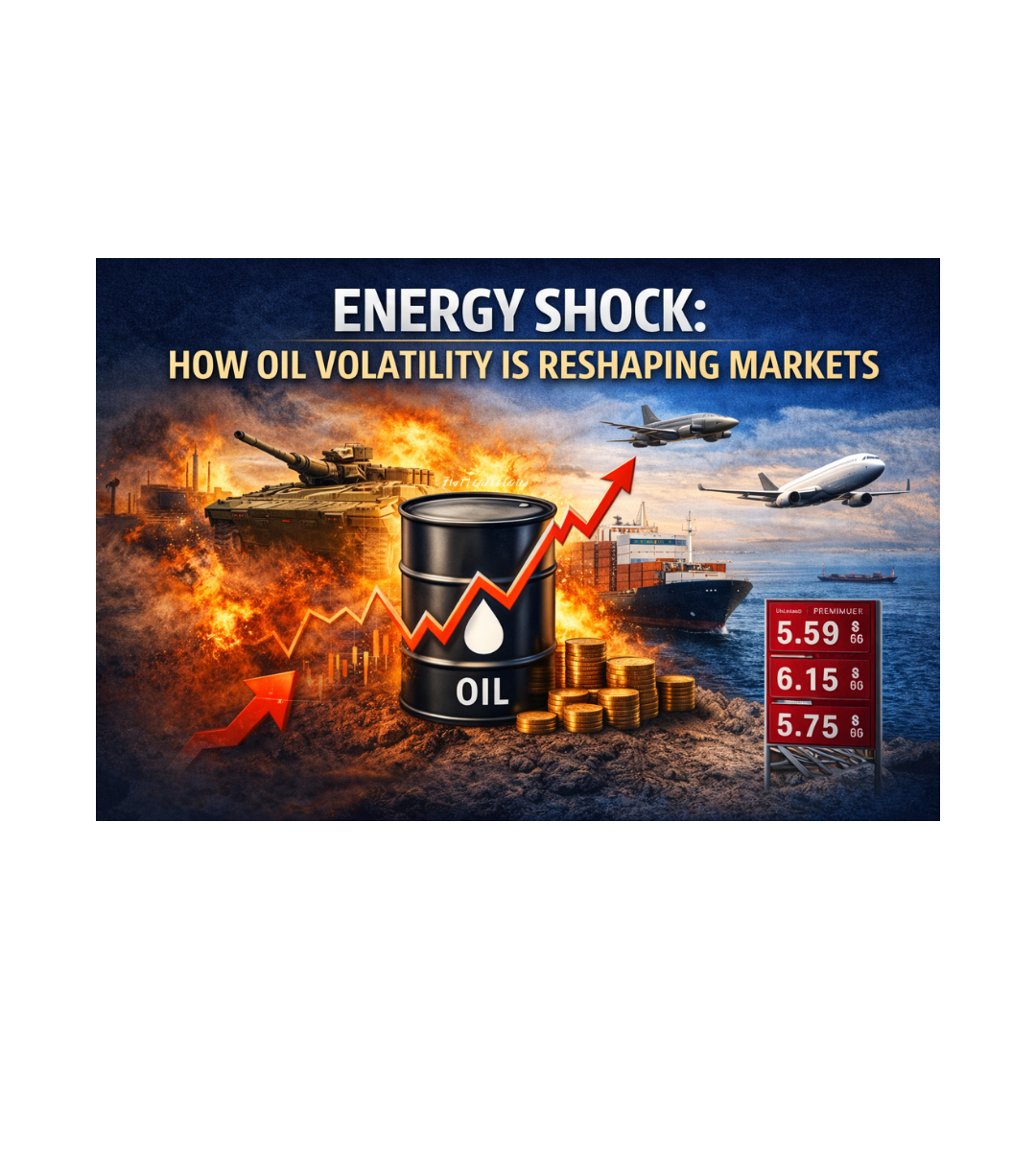
During geopolitical conflicts, one of the first and most immediate reactions is seen in crude oil prices. Supply disruptions, trade restrictions, and uncertainty around production create sharp price movements. For economies like India, which rely heavily on oil imports, these fluctuations have a widespread impact across sectors.

Why Crude Oil Becomes the Center of Attention

War periods tend to disturb global energy supply chains, leading to volatility in oil prices. This shift is driven by three primary factors:

    • Supply Disruptions: Conflicts in oil-producing regions can restrict production or transportation.
    • Geopolitical Uncertainty: Markets react quickly to potential risks in supply continuity.
    • Strategic Reserves & Policies: Countries adjust reserves and import strategies to manage risk.

These factors make crude oil one of the most sensitive and closely tracked commodities during crises.

How Different Sectors Get Impacted

Crude oil volatility does not impact all sectors equally; it creates distinct winners and pressure points:

    • Transport & Aviation: Rising fuel costs increase operating expenses, directly impacting profit margins.
    • Manufacturing: Higher input and logistics costs affect production and consumer pricing.
    • Energy Companies: Oil producers and upstream companies may benefit from higher prices.

In simple terms: When oil prices rise, cost-heavy sectors feel pressure, while resource-linked sectors may see support.

Ripple Effects on Inflation and Consumption

Oil price movements often extend beyond industries and into the broader economy. For India, where fuel plays a key role in cost structures, this impact is particularly significant:

    • Inflationary Pressure: Higher fuel prices contribute to rising inflation.
    • Goods Pricing: Increased transportation costs affect the pricing of everyday goods.
    • Consumer Behavior: Consumer spending patterns may adjust as the cost of living rises.

Shifting Focus Toward Energy Diversification

Periods of volatility also bring attention to long-term energy strategies. Short-term disruptions often influence major structural changes, such as:

    • Increased interest in renewable energy.
    • A renewed focus on reducing import dependency.
    • Investments in energy efficiency and alternative fuels.

What Needs Attention During Such Phases

While oil-linked movements create opportunities, certain risks remain. It is important to avoid:

    1. Reacting only to short-term price spikes.
    2. Ignoring sector-specific differences in impact.
    3. Overlooking long-term structural trends.

The Bigger Picture

Crude oil volatility reshapes sectoral dynamics. In the short term, we see price shocks and cost pressures. In the long term, we witness shifts in energy strategy and sector focus. Crude oil is more than just a commodity; it is a key driver of economic activity. During crisis periods, its movement reflects not just supply concerns, but also changing global priorities.

Frequently Asked Questions

  1. Why is the Indian market so sensitive to crude oil prices?
    India imports over 80% of its crude oil requirements. When global prices rise, it increases the country’s import bill, puts pressure on the Rupee, and drives up costs across almost all industries.
  2. Which sectors are most negatively affected by rising oil?
    Aviation, paint companies, and logistics providers are typically hit hardest because fuel or oil-derivatives make up a massive portion of their operating costs.
  3. Can any sectors benefit from oil volatility?
    Yes. Upstream oil exploration and production companies often see better realizations when prices are high. Additionally, the renewable energy sector often sees increased investment interest as an alternative.
  4. Does an oil price hike always lead to inflation?
    Generally, yes. Since oil is used to transport food and essential goods, an increase in fuel prices usually “leaks” into the price of almost everything else, leading to cost-push inflation.

Investing During Crisis: Key Sectors to Watch

When global conflicts bring volatility and fear into financial markets, broad movements become unpredictable and investor sentiment weakens. However, while uncertainty increases, certain sectors begin to attract more attention. The focus gradually shifts from overall market direction to identifying pockets where demand is building.

Sectors That Gain Attention During a Crisis

During periods of conflict, economic priorities shift, leading to increased demand in a few key areas. These movements are not random; they reflect real changes in global demand and policy direction:

  • Defence: Governments increase military spending, supporting companies involved in equipment, technology, and infrastructure.
  • Commodities: Oil, gas, and metals react sharply due to supply disruptions and geopolitical risks.
  • Safe-Haven Assets: Gold gains importance as investors look for stability during uncertain times.

How War Impacts Different Asset Classes

Conflicts create uneven movement across markets rather than a uniform trend. While the overall market may appear unstable, certain sectors can see stronger activity:

  • Rising oil prices influence energy-linked sectors.
  • Increased Defence budgets support long-term contracts.
  • Supply chain disruptions push commodity prices higher.

Beyond Stocks: Where Else Does Money Move?

Crisis periods also shift attention beyond traditional equities as investors look to balance portfolios:

  • Gold as a store of value.
  • Commodities as a hedge against inflation.
  • Global exposure to reduce concentration risk.

What Needs Attention During Such Phases

Even when opportunities emerge, certain risks remain. Maintaining discipline becomes vital, as you must avoid:

  1. Entering after sharp price increases.
  2. Following short-term news instead of underlying trends.
  3. Ignoring long-term positioning in favour of quick gains.

The Bigger Picture

Crisis periods reshape how capital flows across markets. In the short term, you will see volatility and quick reactions. However, the long-term often reveals sustained demand in key sectors.

Understanding this shift helps in interpreting market behaviour more clearly. Uncertainty changes market behaviour, but it also highlights where future demand is building. The focus isn’t on predicting crises, but on observing how different sectors respond to them.

Frequently Asked Questions

  1. Why does gold become a “safe-haven” during a market crisis?
    Investors look for stability when paper assets like stocks become volatile. Gold is viewed as a store of value that doesn’t depend on any single government or corporation, making it a hedge against geopolitical risk.
  2. How do rising oil prices impact energy-linked sectors?
    Conflicts in oil-producing regions often lead to supply disruptions. This pushes prices higher, which can benefit energy producers but can increase costs for transportation and manufacturing sectors.
  3. Are defence budget increases immediate?
    While the sentiment shifts quickly, actual increases in defence budgets often lead to long-term contracts. These provide sustained revenue visibility for companies involved in technology and infrastructure.
  4. What is the risk of “chasing the news” during a crisis?
    By the time a crisis makes the headlines, prices in sectors like defence or commodities may have already jumped. Entering at these peaks based on news can lead to losses if the situation stabilizes.

Defense Stocks: Long-Term Theme or Short-Term Sentiment Play?

If you’ve been tracking the markets lately, one sector that has consistently grabbed attention is Defence. With rising geopolitical tensions and global conflicts, governments across the world are ramping up military spending, and Defence companies are directly benefiting from this trend.

But here’s the real question: Is this growth sustainable, or just a short-term reaction to current events?

What’s Driving the Surge in Defence Stocks?

The recent rally in Defence stocks is not random. This isn’t just sentiment, it’s backed by real demand and a combination of strong underlying factors:

  • Increased Global Military Budgets: Countries are prioritizing national security, leading to higher spending on Defence equipment and technology.
  • Government Push for Self-Reliance: Especially in countries like India, initiatives to boost domestic Defence manufacturing are creating long-term opportunities.
  • Export Opportunities: Indian Defence companies are increasingly supplying equipment globally, opening new revenue streams.

The War Factor: Short-Term Trigger or Long-Term Catalyst?

Ongoing conflicts have accelerated the demand for Defence equipment, acting as a short-term trigger for stock price movement. However, the bigger picture is more important. Even beyond current conflicts, the world is entering a phase of heightened geopolitical uncertainty, meaning Defence spending is likely to remain elevated for years.

In simple terms: War may have started the rally, but long-term security concerns could sustain it.

Valuations: Are We Paying Too Much?

While the growth story is strong, many Defence stocks have already seen sharp price increases. This raises key concerns for investors:

  1. Are investors entering too late?
  2. Is the optimism already priced in?

In some cases, stock prices may be running ahead of actual earnings growth, which can lead to short-term corrections. Defence is not just a “news-driven” sector, it requires careful selection.

What Should Investors Watch?

Before investing, it’s important to look beyond headlines and focus on these four pillars:

  • Order books and future contracts
  • Government policy support
  • Export growth potential
  • Company fundamentals (not just momentum)

The Bottom Line

Defence stocks sit at an interesting intersection of short-term triggers and long-term structural growth.

  • Short term: Driven by geopolitical tensions.
  • Long term: Supported by rising global Defence spending.

For investors, the key is to separate hype from opportunity and focus on companies with strong fundamentals rather than chasing momentum. Global uncertainty isn’t going away anytime soon, and neither is the demand for Defence. But smart investing isn’t about reacting to news; it’s about understanding what lies beyond it.

Frequently Asked Questions

  1. Are defense stocks a sustainable long-term investment?
    Yes, because they are supported by long-term structural shifts like rising global military budgets and government initiatives for domestic manufacturing self-reliance.
  2. Is the current rally in defense stocks just due to ongoing wars?
    While conflicts act as a short-term trigger for price movements, the broader catalyst is the phase of heightened geopolitical uncertainty which keeps spending elevated for years.
  3. How does the “Push for Self-Reliance” help Indian defense stocks?
    Initiatives to boost domestic manufacturing create a steady pipeline of long-term opportunities and orders for local companies, reducing dependence on imports.
  4. What are the risks of investing in defense stocks right now?
    The main risk is high valuation. If stock prices run ahead of actual earnings growth, it can lead to short-term corrections even if the company is strong.