
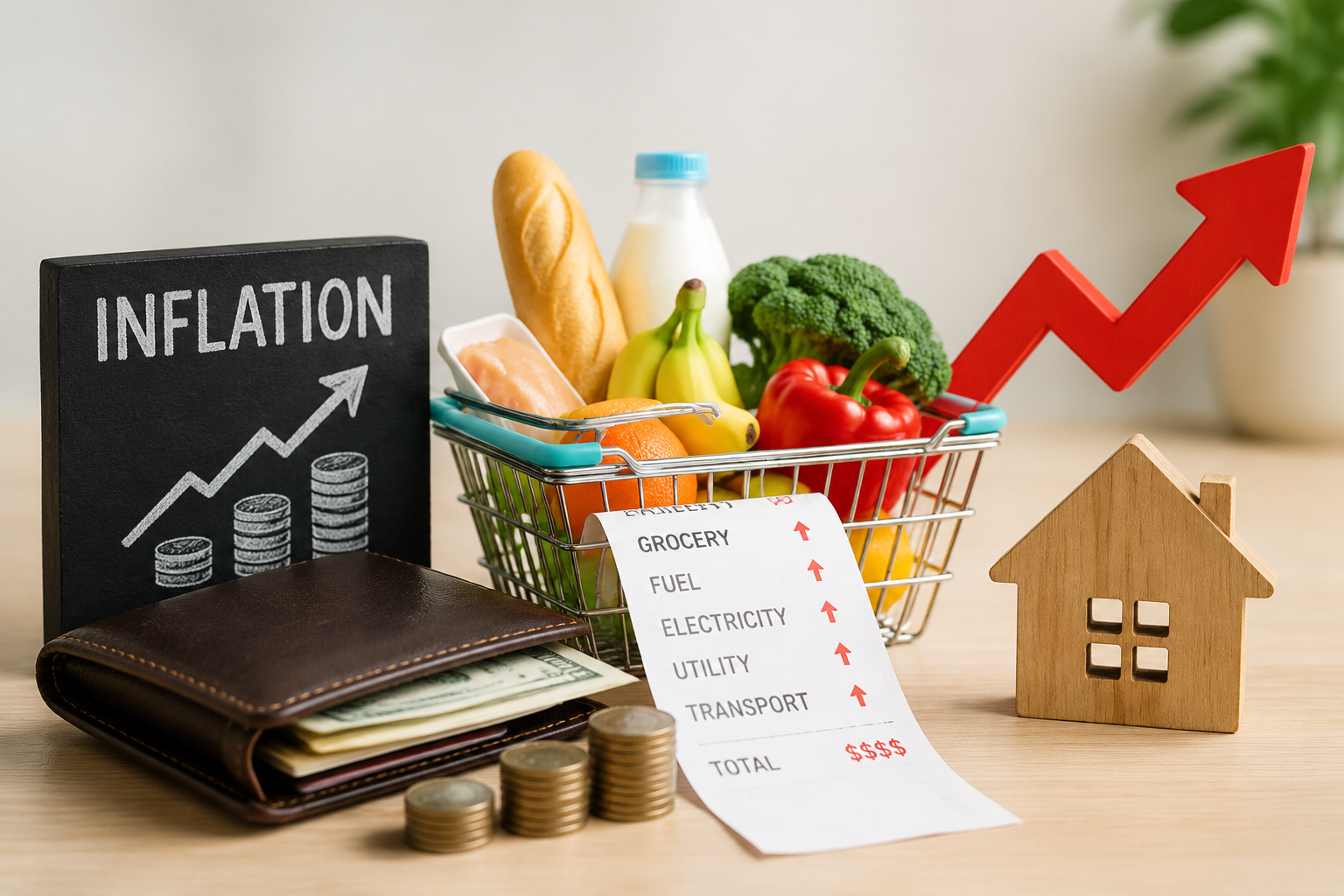
Across multiple economies, prices for everyday goods and services are rising faster than many had expected. This isn’t just about food or fuel getting more expensive; it’s a broad surge that affects nearly every category of spending. Even if nominal income rises, when prices rise faster, the real purchasing power of your money declines.
This global inflation surge is more than just an economic headline, it directly impacts your daily life, household savings, and long-term financial plans.
Why Prices Are Rising
Inflation isn’t driven by one isolated factor alone. It is the cumulative result of systemic macro changes that have forced prices to remain elevated:
- Supply Chain Disruptions: Bottlenecks in production corridors have constrained global goods availability.
- Geopolitical Tensions: Conflicts and regional stress points continue to affect global resource distribution.
- Consumer Demand & Monetary Policy: Shifts in consumer demand combined with historical liquidity patterns have influenced persistent price growth.
While central banks worldwide have responded with aggressive tools, including sharp interest-rate adjustments, many core categories like food, housing, healthcare, and utilities remain structurally elevated, hitting households directly.
How It Touches Your Wallet
When inflation rises, the real value of your money shrinks. If your income doesn’t grow at least as fast as prices, your baseline standard of living takes an immediate hit.
The hidden math of price increases alters your financial reality in three key areas:
- The Budget Squeeze: Fixed expenditures like groceries, commuting costs, utility bills, and leisure expenses eat up cash that could have otherwise been saved.
- The Income Disconnect: Monthly budgets get significantly tighter even when physical paychecks stay exactly the same.
- The Timeline Distortion: For long-term planners, persistent price increases distort retirement goals, lower real investment returns, and increase future cost-of-living projections.
Impact on Everyday Financial Decisions
Rising prices inevitably force households to rethink their operational priorities and shift their asset allocation:
- Discretionary Trimming: Consumers find themselves delaying luxury purchases, cutting down non-essential spending, or reassessing subscription expenses.
- The Cash Dilemma: For savers, holding too much idle cash becomes a guaranteed loss as real returns are completely eroded by price increases.
- The Strategic Pivot: Investors are forced to shift capital away from fixed-interest defaults and toward growth assets that historically outpace inflation over time, such as equities or inflation-protected securities.

The Bottom Line
Global inflation is not just an abstract macroeconomic concept; it is a real, lived experience that erodes the future value of your money. Leaving wealth unmanaged in an inflationary environment stretches budgets and pushes your financial milestones further away. Protecting your purchasing power requires you to stay proactive, review your household budget frequently, and align your investments with assets that can deliver inflation-adjusted growth.
Frequently Asked Questions
- What is the difference between nominal returns and real returns during inflation?
Nominal return is the absolute percentage profit your investment makes on paper. Real return subtracts the inflation rate from that number. If your fund earns 8% but inflation is at 6%, your real purchasing power growth is only 2%. - Why does holding cash become dangerous when inflation is high?
Cash has zero self-growth. If living expenses rise by 6% annually, a stack of cash sitting idle in a wardrobe or standard savings account loses 6% of its actual purchasing power every year, quietly diminishing your real wealth. - How do interest-rate hikes by central banks help control inflation?
Central banks raise interest rates to make borrowing expensive for consumers and corporations. This cools down excessive credit expansion, slows down consumer spending, and tempers market demand, which gradually brings prices down. - Which household expenses are usually hit hardest by core inflation?
Essential, non-discretionary costs like healthcare, daily groceries, housing rent, and fuel are hit hardest. Because households cannot stop consuming these items, their rising prices immediately drain cash away from potential investments.


