
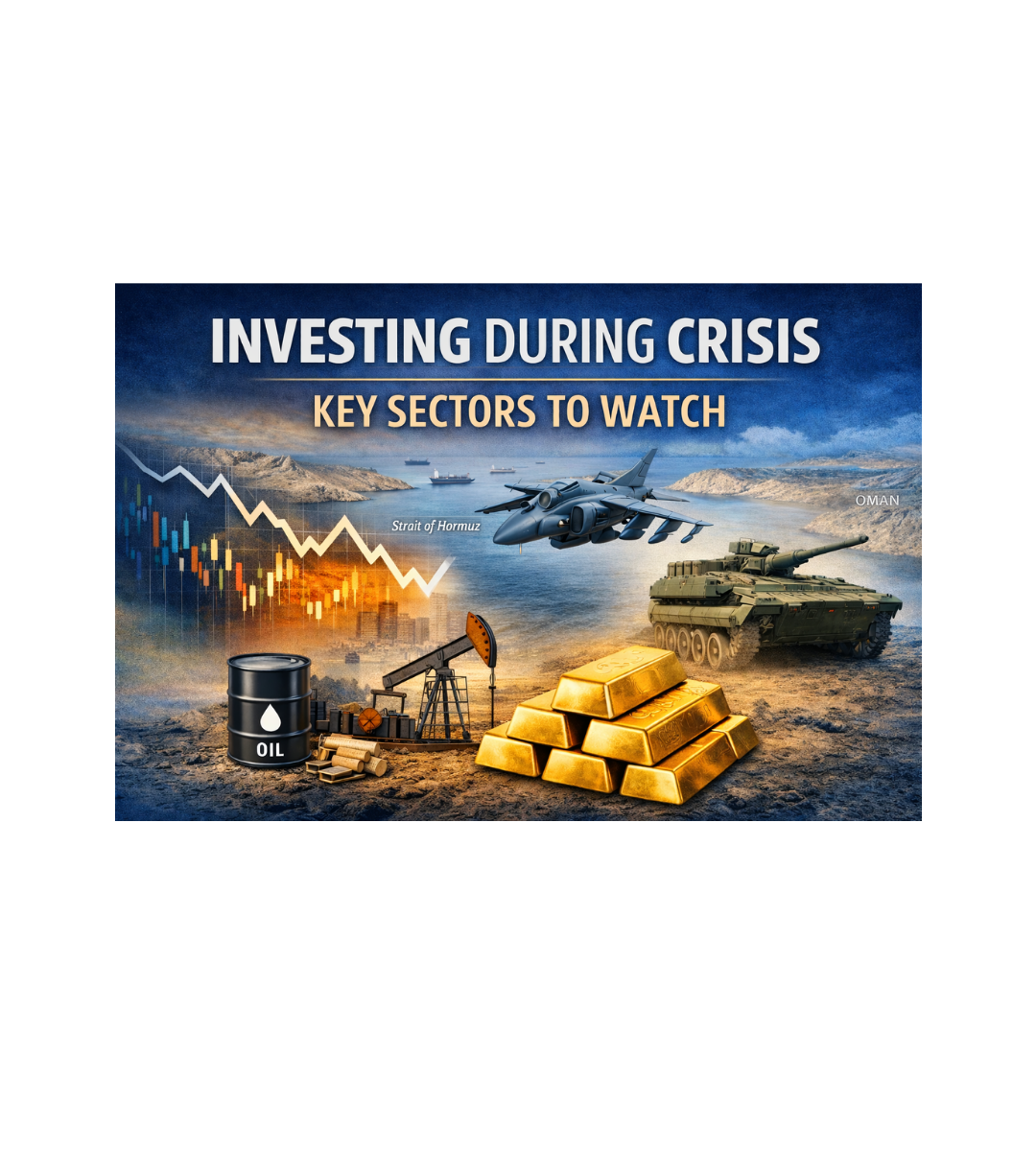
When global conflicts bring volatility and fear into financial markets, broad movements become unpredictable and investor sentiment weakens. However, while uncertainty increases, certain sectors begin to attract more attention. The focus gradually shifts from overall market direction to identifying pockets where demand is building.
Sectors That Gain Attention During a Crisis
During periods of conflict, economic priorities shift, leading to increased demand in a few key areas. These movements are not random; they reflect real changes in global demand and policy direction:
- Defence: Governments increase military spending, supporting companies involved in equipment, technology, and infrastructure.
- Commodities: Oil, gas, and metals react sharply due to supply disruptions and geopolitical risks.
- Safe-Haven Assets: Gold gains importance as investors look for stability during uncertain times.
How War Impacts Different Asset Classes
Conflicts create uneven movement across markets rather than a uniform trend. While the overall market may appear unstable, certain sectors can see stronger activity:
- Rising oil prices influence energy-linked sectors.
- Increased Defence budgets support long-term contracts.
- Supply chain disruptions push commodity prices higher.
Beyond Stocks: Where Else Does Money Move?
Crisis periods also shift attention beyond traditional equities as investors look to balance portfolios:
- Gold as a store of value.
- Commodities as a hedge against inflation.
- Global exposure to reduce concentration risk.
What Needs Attention During Such Phases
Even when opportunities emerge, certain risks remain. Maintaining discipline becomes vital, as you must avoid:
- Entering after sharp price increases.
- Following short-term news instead of underlying trends.
- Ignoring long-term positioning in favour of quick gains.
The Bigger Picture
Crisis periods reshape how capital flows across markets. In the short term, you will see volatility and quick reactions. However, the long-term often reveals sustained demand in key sectors.
Understanding this shift helps in interpreting market behaviour more clearly. Uncertainty changes market behaviour, but it also highlights where future demand is building. The focus isn’t on predicting crises, but on observing how different sectors respond to them.
Frequently Asked Questions
- Why does gold become a “safe-haven” during a market crisis?
Investors look for stability when paper assets like stocks become volatile. Gold is viewed as a store of value that doesn’t depend on any single government or corporation, making it a hedge against geopolitical risk. - How do rising oil prices impact energy-linked sectors?
Conflicts in oil-producing regions often lead to supply disruptions. This pushes prices higher, which can benefit energy producers but can increase costs for transportation and manufacturing sectors. - Are defence budget increases immediate?
While the sentiment shifts quickly, actual increases in defence budgets often lead to long-term contracts. These provide sustained revenue visibility for companies involved in technology and infrastructure. - What is the risk of “chasing the news” during a crisis?
By the time a crisis makes the headlines, prices in sectors like defence or commodities may have already jumped. Entering at these peaks based on news can lead to losses if the situation stabilizes.


