
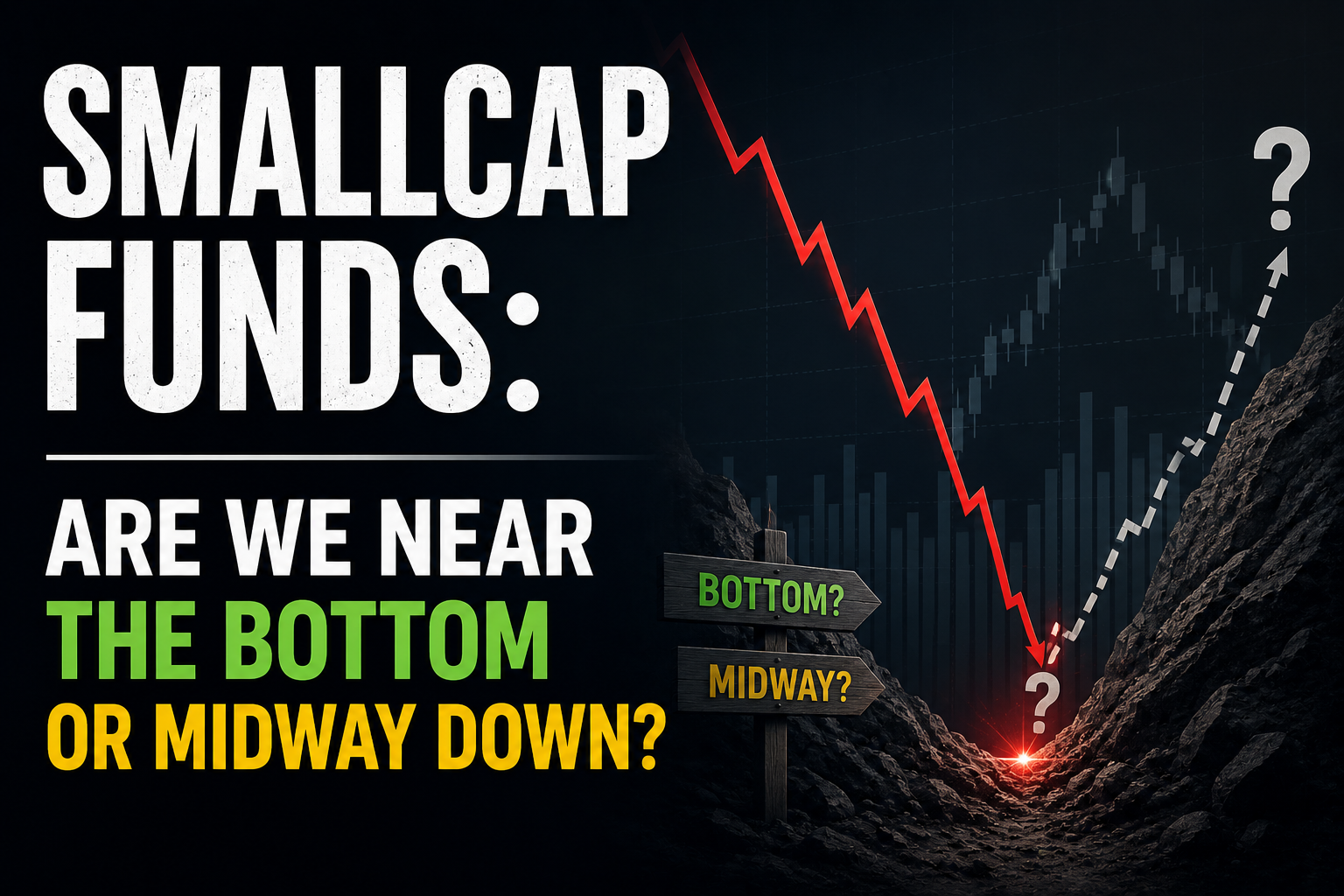
Small-cap funds usually rise much faster in highly optimistic markets, but they can also fall significantly harder when market sentiment turns weak. During deep market corrections, fear often spreads much faster than facts. This makes it incredibly difficult for retail investors to judge whether prices are finally nearing a bottom or whether the overall decline still has more room to continue.
Why Small caps Correct More Sharply?
Smallcap funds react strongly and rapidly when market confidence begins to weaken. This high vulnerability is driven by three clear structural factors:
- Lower Liquidity: Because smallcap stocks have much lower daily trading volumes, sudden selling pressure affects their market prices far more quickly than large-caps.
- Higher Valuation Risk: Smallcaps frequently trade at expensive multiples during bull runs; these stocks correct much faster when future expectations inevitably reset.
- Sentiment Sensitivity: The smallcap segment relies heavily on overall market risk appetite rather than deep institutional backing, making it highly reactive to negative headlines.
How to Read the Current Fall
A major correction in smallcap funds should never be judged solely by the absolute percentage decline of the index. To understand the depth of the fall, consider these underlying realities:
- The Valuation Reset: Rapidly rising prices earlier may have pushed valuations well above fundamental comfort levels. A fall can actually be healthy if it effectively removes this excess optimism.
- The Earnings Anchor: If fundamental company earnings hold strong, the dip presents a viable opportunity. But if company earnings begin to weaken too, the downward correction is highly likely to continue.
In simple terms: The real question is not just how much prices have fallen, but how much structural value remains.
Beyond Prices: What Else Should We Watch?
Finding the true floor of a smallcap correction depends on macro metrics rather than basic index charts. Investors must focus on:
- Earnings Growth: Sustained, real profit growth is the only absolute support that can trigger a long-term price recovery.
- Liquidity Conditions: Thin market liquidity can dramatically worsen price declines, creating a wider gap between paper valuations and execution realities.

What Needs Attention Right Now?
Even when smallcap fund NAVs look significantly cheaper, maintaining absolute discipline remains critical. You must watch out for these common psychological traps:
- The Bottom-Fishing Trap: Catching a falling knife by entering immediately after sharp falls does not guarantee you are buying anywhere near the actual bottom.
- The Fake Rebound: Short-term, aggressive rebounds are very often temporary “relief rallies” or dead-cat bounces rather than a structural reversal.
- Prolonged Weakness: Broad, segment-wide weakness in smallcaps can easily last much longer than retail investors expect.
The Bigger Picture
Smallcap corrections typically move in distinct phases, which explains why a market can appear deceptively cheap after an initial fall yet still remain vulnerable to further drawdowns.
A price drop alone never confirms a definitive bottom. The real signal comes only from a structural mix of reasonable valuations, underlying earnings resilience, and localized liquidity conditions. Instead of trying to predict the exact turning point, your focus should be on whether the core risks are now fully understood and fairly priced in.
Frequently Asked Questions
- Why do smallcap funds experience much deeper drops than large-cap funds?
Smallcap stocks have low daily trading liquidity. When panic hits and investors try to sell all at once, the lack of ready buyers forces stock prices down at an accelerated rate compared to highly liquid blue-chip companies. - Is a 20% drop in a smallcap fund a reliable signal that it has reached the bottom?
No. Percentage drops alone are deceptive. If a smallcap fund was trading at highly overvalued levels before the correction, a 20% drop might simply mean it is midway down, especially if corporate earnings are also slowing down. - Should I stop my smallcap SIP during a deep segment correction?
No. Stopping your SIP during a correction defeats the purpose of the strategy. Dips allow your automated monthly investments to accumulate a higher volume of mutual fund units at significantly lower costs, boosting your long-term compounding base. - What should an investor focus on instead of predicting the market bottom?
Investors should evaluate structural business fundamentals, diversification, and time horizons. The goal is to ensure your portfolio can comfortably withstand extended phases of stagnation without forcing you to sell out in panic.


