

Your fund’s CAGR looks great on paper but how much of it did you actually pocket?
India’s mutual fund AUM crossed ₹66 lakh crore in 2025. Crores of investors track their returns with pride. Most are quietly earning far less than the fund delivered. Welcome to the Behaviour Gap.
The Gap Nobody Talks About
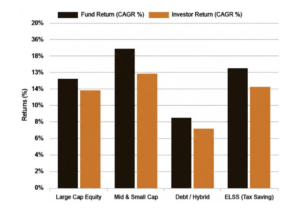
A fund’s “Total Return” (CAGR) shows what a lump sum would have grown to over time. However, Investor Return accounts for the timing of buys and sells.
- The Reality: Globally, investors lose about 1–1.5% annually to poor timing.
- The India Factor: In our volatile market, this gap is often much wider.
- The Cause: We tend to pile into mid-cap rallies at the peak and panic-sell during corrections.
Why We Get in Our Own Way?
The culprit isn’t the market; it’s human psychology. Research shows a consistent, damaging pattern in Indian retail investing:
-
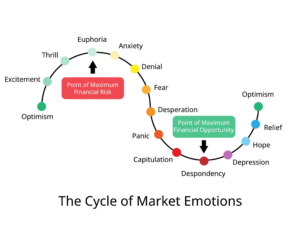
- Performance Chasing: Inflows peak after a fund has already delivered massive 3-year returns.
- Panic Redemptions: Outflows spike precisely when NAVs bottom out.
- The Result: By buying high and selling low, investors hand back their compounding gains to the market.
“We tend to buy after a fund has had a good run and sell after it’s had a poor run. Human nature, being what it is.” — Russel Kinnel, Morningstar Director of Manager Research
SIPs: The Tool vs. The Discipline
Systematic Investment Plans (SIPs) are the best defense against emotional trading, but they aren’t foolproof.
- The Strength: Rupee-cost averaging automatically buys more units when prices are low.
- The Weakness: The strategy only works if you don’t interfere.
- The Common Mistake: Many investors pause SIPs during “bad” markets or switch to last year’s top performer, triggering exit loads and taxes.
How to Close the Gap
To ensure you actually “pocket” the CAGR your fund promises, follow these guidelines:
- Automate & Evacuate: Start a SIP and stop checking the NAV daily.
- The Quarterly Rule: Review your portfolio once every three months—never during a market crash.
- Kill the Comparison: Don’t swap funds just because another category had a temporary “hot” streak.
- Goal-Based Exit: Define your target date and let compounding work undisturbed until you reach it.
India’s new investors have something previous generations didn’t: awareness. The behaviour gap is not a market problem; it’s a mindset one. The fund will deliver its returns. The only question is whether you’ll be patient enough to receive them.
Frequently Asked Questions
- What is the “Behaviour Gap” in mutual funds?
The difference between the returns a fund generates and the actual returns an investor “pockets.” It is usually caused by emotional decisions like buying when the market is high and selling during a crash. - Why are my actual returns lower than the fund’s CAGR?
If you started your investment after a fund already performed well, or if you paused your SIP during a market dip, you likely missed the periods of highest growth, leading to a gap in performance. - Can an SIP completely eliminate the Behaviour Gap?
An SIP is a powerful tool for discipline, but it only works if you don’t interfere. Investors often “break” the SIP by stopping it during volatility or switching funds frequently, which restores the gap. - How often should I monitor my mutual fund portfolio?
To avoid emotional triggers, it is best to review your portfolio quarterly or even bi-annually. Frequent daily checks of the NAV often lead to “panic-selling” or “performance chasing.”


