
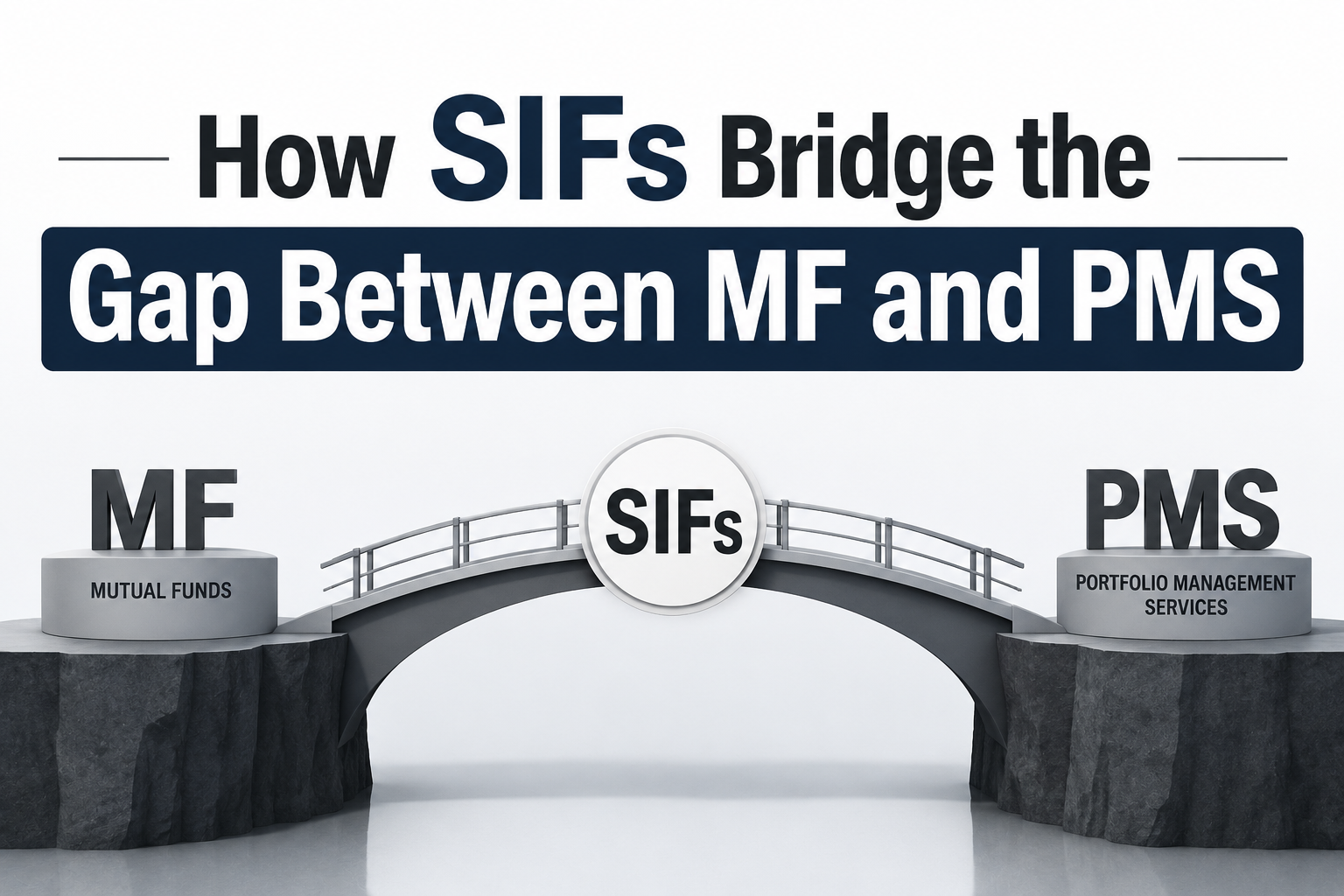
Specialised Investment Funds (SIFs) are a new category created for investors seeking more flexible strategies than traditional mutual funds. They sit perfectly between regular mutual funds and Portfolio Management Services (PMS), offering a broader investment scope while remaining safely within a regulated fund structure. This makes them highly relevant for investors looking beyond standard fund products.

What Are SIFs Designed For?
SIFs are meant to provide greater strategy flexibility in areas that traditional retail products cannot touch. This vehicle creates a critical middle path between simplicity and strategy depth, providing a middle ground for those seeking institutional-grade strategies within a regulated framework:
- Broader Allocation: They allow for significantly more room across equity, debt, and other market-linked strategies.
- Advanced Approaches: SIFs utilize the ability to deploy more specialised portfolio construction methods.
- Investor Suitability: These products are specifically targeted at relatively informed investors with a higher risk understanding.
How Are They Different from Mutual Funds?
While both options are fundamentally pooled products, their underlying mechanics, target audience, and intended use can be quite different:
- Retail vs. Specialised: Regular mutual funds are structurally built for broader, mass retail participation with rigid safety guardrails.
- Portfolio Freedom: SIFs are expected to allow far more flexibility in portfolio design, short-term tactical calls, and asset concentration.
- Risk Complexity: The overall risk-return profile of an SIF may be more complex and volatile than standard, traditional fund categories.
In simple terms: Mutual funds offer simplicity for the masses; SIFs offer advanced strategy customization.
Beyond Returns: Why Was This Category Needed?
The investment market has been evolving rapidly, and many investors now look for sophisticated products that go entirely beyond standard equity or debt categories. SIFs fill this gap for investors seeking more than basic diversification by offering:
- More customised risk exposure tailored to specific market conditions.
- Greater strategy variety, allowing for sophisticated hedging or multi-asset combinations.
- A strictly regulated alternative to more exclusive, high-ticket investment products.

What Needs Attention Before Investing?
Even if this new category appears highly attractive, certain structural areas need your close attention before you deploy capital:
- Complexity: High strategy flexibility can make these specific products much harder to evaluate and track over time.
- Risk Understanding: Investors must deeply understand exactly what the fund is trying to achieve and how it manages downside risk.
- Suitability: Not every individual investor needs a more specialised category; regular funds still do the heavy lifting for basic goals.
The Bigger Picture
SIFs reflect how the investment industry is becoming increasingly layered to serve different net-worth segments. Traditional funds remain the broad, simpler retail-oriented offerings, while SIFs emerge as the more specialised, strategy-driven products for seasoned portfolios.
They are not just another fund label; they represent a brand-new category offering higher structural flexibility than traditional mutual funds while staying within a tightly regulated framework. For investors, the ultimate question is whether the strategy, complexity, and risk level truly match their own long-term goals and operational understanding.
Frequently Asked Questions
- What are Specialised Investment Funds (SIFs)?
SIFs are a new regulated investment category designed to offer more flexible portfolio strategies than standard mutual funds, acting as a middle ground between retail mutual funds and high-ticket Portfolio Management Services (PMS). - How do SIFs bridge the gap between Mutual Funds and PMS?
Mutual funds are highly regulated but rigid in their strategy, while PMS offers extreme flexibility but requires a very high minimum investment. SIFs bridge this gap by bringing advanced, flexible institutional strategies into a regulated, pooled fund structure. - Who is the ideal investor for an SIF?
SIFs are designed for relatively well-informed investors who have a higher risk tolerance and a clear understanding of complex investment strategies, rather than beginners or conservative retail investors. - Are SIFs riskier than standard equity mutual funds?
Generally, yes. Because SIFs have more flexibility in asset allocation and portfolio construction methods, their risk-return profile can be more complex and volatile than a standard diversified retail mutual fund.


