How Time Beats Volatility in the Stock Market

How Time Beats Volatility in the Stock Market

Investing in the stock market is often perceived as a roller-coaster ride of unpredictable highs and lows. However, time has proven to be a powerful ally in mitigating the effects of market volatility. In this article, we’ll delve into how time beats volatility in the stock market, why long-term investing is a winning strategy, and how you can leverage time to sustain wealth.

Understanding Market Volatility

Market volatility refers to the rapid and unpredictable fluctuations in stock prices. While it can be daunting for short-term traders, long-term investors can use volatility to their advantage. Instead of reacting to market dips and peaks, seasoned investors adopt a long-term perspective, allowing them to ride out market cycles and reap significant returns.

Key Takeaway: Volatility is a natural part of the stock market. It is not something to fear but rather a phenomenon to understand and manage effectively.

The Power of Time in Investing

Time is the most critical factor in mitigating volatility. Here’s how:

1. Compounding Effect: The longer you stay invested, the more time your investments have to grow through compounding. Compounding generates returns on both your initial investment and the accumulated returns, creating exponential growth over time.

Example: If you invest ₹1,00,000 at an annual return of 10%, your investment will grow to approximately ₹2,59,000 in 10 years and over ₹6,72,000 in 20 years. The longer you remain invested, the greater the impact of compounding.

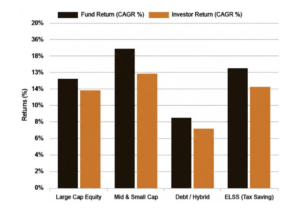
2. Market Cycles Even Out: Over the short term, the stock market can be highly volatile, reacting to economic news, geopolitical events, and investor sentiment. However, over the long term, these fluctuations tend to average out.

Historical data shows that despite periodic crashes, the market has always trended upwards in the long run. For instance, the BSE Sensex, which was around 100 points in 1979, crossed 66,000 points in 2023.

3. Cost Averaging: Regular investments through methods like SIP (Systematic Investment Plan) allow investors to average the cost of their investments. When the market is down, you buy more units; when the market is up, you buy fewer units. This strategy reduces the impact of short-term volatility.

Why Short-Term Trading is Risky

Short-term trading involves buying and selling stocks based on market movements. While some traders may make quick profits, the majority end up losing money due to:

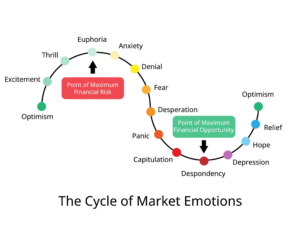
  • Emotional Decision-Making: Fear and greed often drive short-term traders, leading to irrational decisions.
  • Transaction Costs: Frequent buying and selling can rack up significant brokerage fees and taxes, reducing overall returns.
  • Market Timing Risks: Predicting market movements accurately is nearly impossible, even for experienced investors.

Case Study: The 2008 Financial Crisis

The 2008 financial crisis is a prime example of how long-term investing can outlast short-term volatility. During the crisis, the stock market plummeted by nearly 50%, and investors who panicked and sold off their assets incurred massive losses.

However, those who remained invested and continued to contribute to their portfolios saw their investments recover and grow significantly over the next decade. By 2021, the market had not only recovered but also reached record highs.

Lesson: Staying invested during volatile periods can yield substantial long-term gains.

Strategies to Leverage Time in the Stock Market


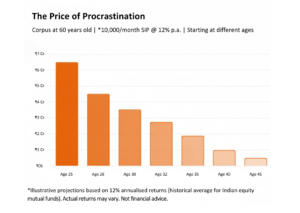
  1. Start Early: The earlier you start investing, the more time your investments have to compound. Even small investments can grow significantly over 15-20 years.
  2. Diversify Your Portfolio: A well-diversified portfolio reduces risk and smoothens returns over time. Include a mix of large-cap, mid-cap, and small-cap stocks, along with bonds and mutual funds.
  3. Invest Consistently: Regular investments, such as monthly SIP, help in rupee cost averaging and mitigate the impact of short-term volatility.
  4. Focus on Quality Stocks: Invest in fundamentally strong companies with a history of consistent earnings, robust management, and sustainable growth.
  5. Stay Disciplined: Avoid reacting to short-term market noise. Stick to your investment plan and review your portfolio periodically, but avoid impulsive decisions based on market fluctuations.

How to Stay Calm During Volatile Markets

  • Stay Informed but Not Obsessed: Keep track of market news but avoid checking your portfolio daily.
  • Revisit Your Financial Goals: Remind yourself why you started investing — long-term wealth creation, retirement planning, or financial independence.
  • Seek Professional Guidance: Consult a financial advisor to help you maintain a steady investment strategy during market turmoil.

Conclusion

Time is the ultimate weapon against market volatility. While short-term market movements may be unpredictable, the long-term trend of the stock market has historically been upward. By focusing on compounding, cost averaging, and disciplined investing, you can navigate market volatility with confidence and build wealth sustainably.

Are you ready to harness the power of time to beat volatility and achieve your financial goals? Start investing today and let time work its magic.

Frequently Asked Questions

  1. How does time help in reducing the impact of stock market volatility?

Time allows investments to recover from short-term market fluctuations. Over the long term, the stock market has historically trended upward, averaging out periods of volatility and generating positive returns.

  1. What is compounding, and how does it work in long-term investing?

Compounding is the process where your investment earns returns, and those returns generate additional returns over time. The longer you stay invested, the more powerful the compounding effect becomes.

  1. Can short-term trading beat the market?

Short-term trading is risky and requires precise market timing, which is extremely difficult. Long-term investing is more likely to yield consistent returns by mitigating short-term volatility and leveraging compounding.

  1. What is rupee cost averaging, and how does it help in volatile markets?

Rupee cost averaging involves investing a fixed amount at regular intervals. During market dips, you buy more units; during market highs, you buy fewer units. This strategy helps in averaging out the cost of investments over time.

How does SIP help in the wealth creation process?

Wealth creation is a goal many aspire to achieve. One effective and disciplined way to build wealth over time is through Systematic Investment Plans (SIPs). SIPs allow investors to invest a fixed amount of money regularly in mutual funds. This method fosters consistent saving and investing habits. In this blog post, we’ll explore how SIPs contribute to wealth creation, their benefits, and some strategies to maximize returns.

What is an SIP?

A Systematic Investment Plan (SIP) is a way to invest in mutual funds where you invest a fixed sum at regular intervals, such as weekly, monthly, or quarterly. Unlike lump-sum investments, SIPs spread your investment over time, reducing the impact of market volatility and making investing more accessible.

Benefits of SIPs in Wealth Creation

1. Disciplined Investing: SIPs encourage regular investments, instilling a habit of saving and investing consistently. This disciplined approach helps in building a substantial corpus over time.


2. Rupee Cost Averaging: SIPs help mitigate the impact of market volatility. By investing a fixed amount regularly, you buy more units when prices are low and fewer units when prices are high. This averages out the cost of your investments over time, known as rupee cost averaging.


3. Power of Compounding: The returns generated from your SIP investments are reinvested, leading to compound growth. Over the long term, compounding can significantly enhance your wealth.


4. Affordability: SIPs allow you to start investing with a small amount, making it accessible for individuals with varying financial capacities. You don’t need a large sum of money to begin your investment journey.


5. Flexibility: SIPs offer flexibility in terms of investment amounts and intervals. You can increase or decrease your SIP amount, pause investments, or even stop them altogether, depending on your financial situation.

How SIPs Work in Wealth Creation

1. Long-Term Investment: SIPs are ideal for long-term investment goals. The longer you stay invested, the more your money grows due to compounding. It is essential to remain patient and avoid withdrawing your investments prematurely.


2. Regular Monitoring: While SIPs require less active management than other investment methods, it’s crucial to monitor your investments periodically. Keep track of the performance of the mutual funds in which you have invested and make adjustments if necessary.


3. Diversification: Diversifying your investments across mutual funds can reduce risk and enhance returns. Consider spreading your SIPs across equity, debt, and hybrid funds to balance risk and reward.


4. Goal-Based Investing: Align your SIP investments with specific financial goals, such as buying a house, funding education, or planning retirement. Goal-based investing provides clarity and motivation to stay invested.

Practical Strategies to Maximize SIP Returns

1. Start Early: The earlier you start investing through SIPs, the more time your money has to grow. Even small investments made early can result in significant wealth over time due to the power of compounding.


2. Increase SIP Amounts Gradually: As your income grows, consider increasing your SIP amounts. This step can accelerate your wealth creation process without putting a strain on your finances.


3. Stay Consistent: Consistency is key in SIP investing. Avoid stopping your SIPs during market downturns. Instead, view market corrections as opportunities to buy more units at lower prices.


4. Review and Rebalance: Periodically review your investment portfolio and rebalance it to align with your financial goals and risk tolerance. Rebalancing ensures that your portfolio remains diversified and optimized for growth.

Conclusion

Systematic Investment Plans (SIPs) offer a structured and disciplined approach to wealth creation. By investing a fixed amount regularly, you benefit from rupee cost averaging, the power of compounding, and affordability. SIPs encourage long-term investing, regular monitoring, diversification, and goal-based investing.


To maximize returns, Start early, increase SIP amounts gradually, stay consistent, and periodically review and rebalance your portfolio. SIPs can be a powerful tool in your wealth creation journey. With patience, discipline, and strategic planning, you can achieve your financial goals and build a substantial corpus over time.